
As food manufacturers, dietary supplement producers, and botanical companies look for ways to improve quality assurance, reduce product hold times, and lower long-term testing costs, more organizations are exploring the benefits of bringing microbial testing in-house.
One of the first questions quality managers ask is:
“What equipment do we actually need for an in-house microbial testing lab?”
The answer depends on the type of testing your facility plans to perform. While a laboratory focused on nutritional analysis or chemical contaminants requires highly specialized instrumentation, a lab dedicated to routine microbial testing can often be built with a much more practical and streamlined set of equipment.
Modern qPCR testing platforms like PathoSEEK® require less manual work, deliver faster results, and occupy a much smaller footprint than traditional culture-based microbiology methods.
In this guide, we’ll walk through the equipment needed for an in-house microbial testing lab, explain the role of each component, and discuss how modern qPCR technologies make microbial testing more accessible for food manufacturers, dietary supplement producers, and botanical companies.
A Dedicated Laboratory Space
An in-house testing lab should be separated from manufacturing operations to reduce the risk of contamination and provide a controlled environment for sample preparation and analysis.
Depending on your testing volume, this may be:
- A dedicated laboratory room
- A quality control laboratory
- A partitioned testing area
- A clean workspace within an existing QA department
The space should allow for:
- Organized workflows
- Easy cleaning
- Proper ventilation
- Controlled access
- Secure sample storage
- Easy access to electrical outlets
A well-designed laboratory layout also minimizes cross-contamination and improves workflow efficiency.
Laboratory Benches and Workstations
Every testing lab needs durable work surfaces that support sample preparation and analysis.
Laboratory benches should provide enough room for:
- Sample preparation
- Testing instruments
- Pipetting
- Documentation
- Equipment operation
Easy-to-clean, chemical-resistant surfaces are preferred because they support good laboratory practices and simplify routine sanitation.
Keeping workstations organized also reduces errors and improves testing consistency.
Refrigeration and Cold Storage
Controlling temperature is an essential part of microbial testing, and as a result many microbial testing supplies are stored cold.
qPCR detection assays and controls are kept cold to prevent thermal breakdown of fluorescent probes. Polymerase enzymes must also remain cold during the qPCR setup or else they will start working too early.
Culture plates are stored cold to preserve freshness and prevent drying out.
An in-house testing lab typically includes:
- Laboratory refrigerator (4ºC)
- Laboratory freezer (-20ªC)
- Crushed ice maker or cold racks
Environmental Monitoring Supplies
Many manufacturers perform routine environmental monitoring as part of their internal safety program. The following items can be used to collect environmental samples in the facility:
- Surface swabs
- Sponge sampling kits
- Air sampling tools (where applicable)
- Sterile collection containers
Regular environmental testing helps verify sanitation effectiveness and identify potential contamination before it affects products.
Sample Preparation Equipment
Before microbial testing can begin, samples must be properly prepared. In general, this process includes adding a sample portion to an enrichment media, homogenizing the mixture, and incubating it for a period of time.
Common sample preparation equipment includes:
- Laboratory blenders or homogenizers
- Sterile sample bags (i.e., Whirl-Pak bags)
- Scientific Scale (milligrams)
- Sterile tubes
- Measuring devices
Consistent sample preparation is essential for obtaining reliable and repeatable results.
Many modern testing kits are designed to simplify this step, reducing manual handling while improving workflow efficiency.
Proper storage helps preserve sample integrity and maintain testing accuracy.
Temperature monitoring should also be part of the laboratory’s quality management system.
Incubators
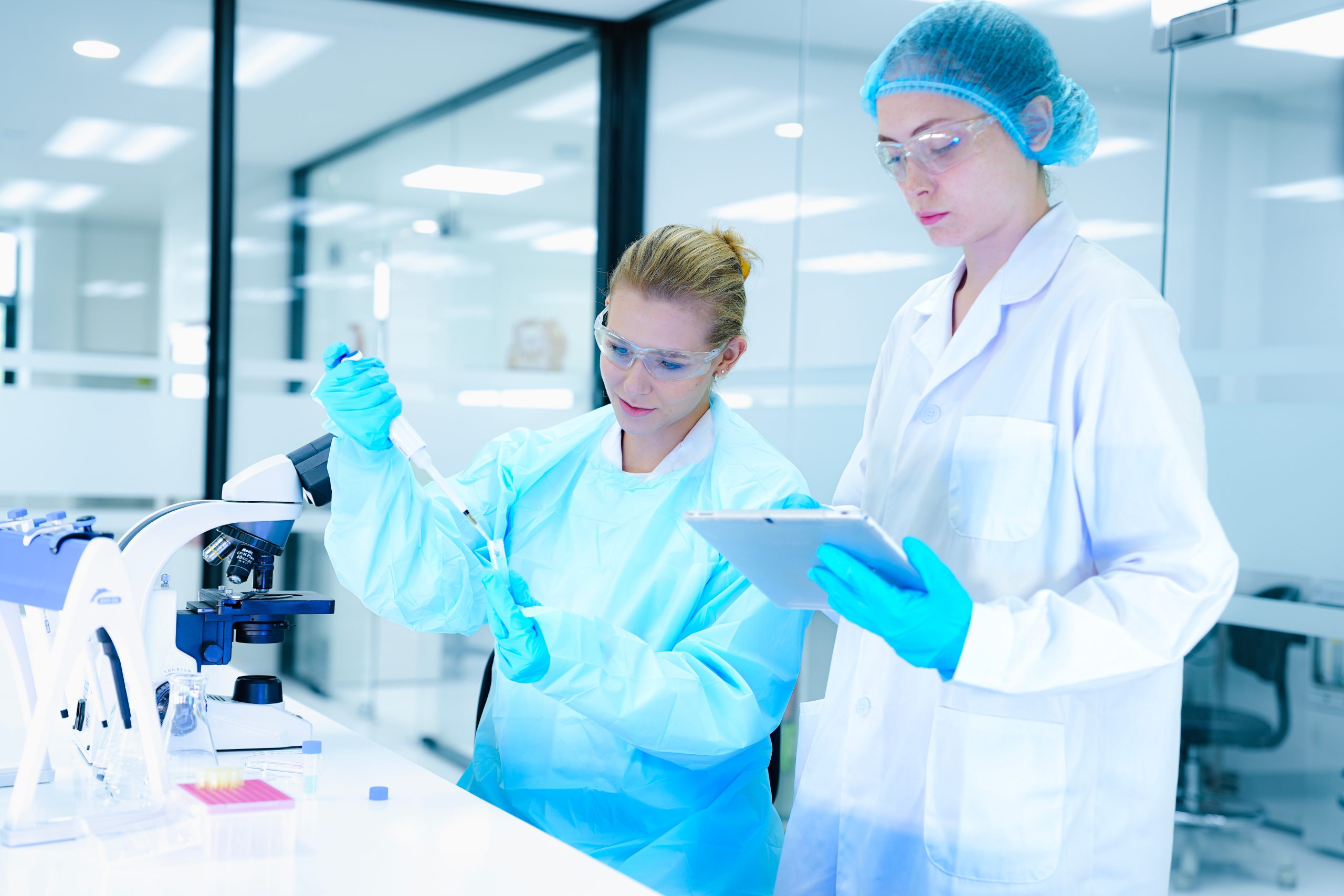
Samples are enriched in incubators to allow microorganisms to grow before they can be detected. The temperature and the duration of the incubation depend on the method being used and target organism(s).
Additionally, the number and size of incubators needed depends on sample volume and testing methods.
While enrichment remains part of many testing workflows, qPCR methods often require shorter incubation times to reach final results compared to conventional culture-based approaches.
Pipettes and Liquid Handling Tools
After enrichment, a small portion of the sample is transferred to the next step in the process. qPCR methods typically require multiple small-volume transfers, so accurate liquid handling is critical.
Microbial laboratories typically maintain several pipette sizes for different sample volumes:
- Single channel pipettes (P10, P20, P200 & P1000)
- Multi-channel pipettes (optional – helpful for higher throughput processing)
- Filtered pipette tips
Automated liquid handling robotics can also be used to simplify this process. Instruments like the Myra Liquid Handler are programmed to perform all the required pipette steps for qPCR setup, saving time and reducing errors.
Personal Protective Equipment (PPE)
Protecting laboratory personnel is just as important as protecting samples.
Standard laboratory PPE often includes:
- Lab coats
- Gloves
- Safety glasses
- Face protection (when appropriate)
Waste Disposal Supplies
Facilities should also establish standard operating procedures for safe laboratory practices and proper waste disposal of:
- Used sample containers
- Pipette tips
- Gloves
- Biological materials
- Disposable testing supplies
Proper waste management supports both laboratory safety and regulatory compliance.
Data Management and Documentation
Testing doesn’t end when results are generated.
Laboratories also need systems for recording and managing data.
Many facilities use:
- Laboratory information management systems (LIMS)
- Electronic recordkeeping
- Quality management software
- Digital reporting systems
Accurate documentation supports:
- Regulatory compliance
- Internal audits
- Trend analysis
- Traceability
- Continuous improvement
Digital systems also make it easier to review historical data and identify long-term quality trends.
qPCR Instrument/Thermal Cycler
In-house labs that use a qPCR method need a qPCR instrument, which performs the actual detection. The size and cost of these instruments can vary widely; however, advancements in qPCR technology have reduced both. For example, the Mic qPCR Cycler occupies a footprint less than 35 inches and costs a fraction when compared to larger instruments.
Calibration and Quality Control Equipment
Maintaining reliable laboratory performance requires routine verification.
Laboratories should have procedures and equipment for:
- Instrument calibration
- Temperature verification
- Pipette calibration
- Quality control testing
Regular calibration ensures instruments continue operating within acceptable specifications.
Consistent quality control helps maintain confidence in testing results over time.
Cleaning and Sanitation Supplies
An organized laboratory depends on consistent cleaning practices.
Essential sanitation supplies include:
- Laboratory disinfectants
- Cleaning wipes
- Sterile alcohol solutions
- Surface sanitizers
- Disposable towels
Routine cleaning helps prevent cross-contamination and supports good laboratory practices.
How Medicinal Genomics Simplifies Laboratory Setup
One reason more manufacturers are investing in internal microbial testing is that molecular testing methods offer:
- Faster detection
- High sensitivity
- Simplified workflows
- Reduced manual labor
- Greater consistency
- Improved scalability
Companies like Medicinal Genomics have helped lead this transformation by automating their method using the BMS Myra Liquid Handler and Mic qPCR Cycler.
This streamlined workflow means manufacturers of food, dietary supplements, botanicals, and natural products don’t need to build large traditional microbiology labs. They can establish efficient, compliant testing programs using equipment designed for speed, consistency, and ease of use.
Building Your Lab in Phases
Not every facility needs to purchase every piece of equipment on day one.
Many successful manufacturers build their laboratories gradually.
A phased approach might look like this:
Phase 1
- Laboratory workspace
- Sample preparation equipment
- Basic laboratory supplies
- Rapid microbial testing platform
Phase 2
- Expanded environmental monitoring
- Additional storage
- Increased testing capacity
Phase 3
- Automation
- Integrated laboratory software
- Additional testing capabilities
Building gradually allows facilities to align investments with testing volume and business growth.
Questions to Ask Before Purchasing Equipment
Before investing in laboratory equipment, consider the following:
- What types of microbial testing will we perform?
- How many samples will we process each week?
- Which tests should remain outsourced?
- How much product hold time could we reduce?
- Do we have adequate laboratory space?
- How will testing integrate into existing quality workflows?
- Can our equipment scale as production grows?
Answering these questions helps ensure your laboratory is designed around operational needs rather than unnecessary equipment purchases.
Final Thoughts
Building an in-house food testing lab doesn’t have to mean constructing a large, highly specialized microbiology facility. For many manufacturers, especially those producing food, dietary supplements, botanicals, and natural products, the goal is simply to perform routine microbial testing faster and more efficiently than traditional outsourced workflows allow.
By investing in the right combination of laboratory space, sample preparation tools, quality management systems, and modern microbial testing technology, manufacturers can reduce product hold times, improve inventory management, and gain greater control over their quality assurance programs.
Perhaps the biggest advancement in recent years has been the rise of genomic testing. Companies like Medicinal Genomics have made in-house microbial testing more accessible by developing molecular testing platforms that combine cutting-edge genomic science with streamlined workflows. These solutions help manufacturers achieve rapid, reliable microbial detection without the complexity of traditional culture-based microbiology.
As testing demands continue to grow, equipping your laboratory with the right tools isn’t just about meeting regulatory requirements—it’s about building a smarter, more agile quality program that supports faster decisions, greater operational efficiency, and long-term business success.