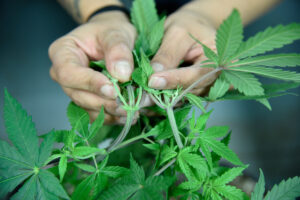

As cannabis legalization spread state by state, each new market came with a different combination of mandated tests, including potency, purity, microbial contaminants, heavy metals, and pesticides. However, one requirement that remained constant across all jurisdictions is that independent, licensed, third-party labs would perform the tests. Cannabis testing labs are often carefully monitored by state agencies, and as a result, they have developed rigorous analytical methods that stand up to scrutiny.
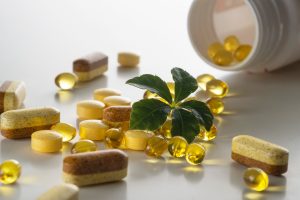
Now, many cannabis labs are beginning to realize they can apply their hard-won expertise to a much older, and much larger, market: nutraceuticals and dietary supplements.
1. Supplements are Booming
The dietary supplement industry is experiencing remarkable growth. According to the National Center for Complementary and Integrative Health, 58.5% of U.S. adults used dietary supplements in 2023 — a 12% increase from 2019. Globally, the World Health Organization estimates that approximately 3.5 billion people consume dietary supplements regularly.
The testing market that supports this industry is growing accordingly. The global nutraceutical product testing market is currently estimated at $2.93 billion and is projected to reach $7.33 billion by 2035, growing at a 9.6% CAGR. The dietary supplement testing market specifically is on a parallel trajectory, valued at $1.2 billion in 2024 and expected to reach $2.1 billion by 2034.
Yet despite this explosive growth, the supplement industry has long operated with far less mandatory third-party oversight than cannabis. Unlike cannabis, where state regulations typically require testing before any product reaches consumers, dietary supplements can reach retail shelves without pre-market testing approval under current FDA frameworks. That regulatory gap has created real consequences. The CDC reported 23,005 emergency department visits related to dietary supplements in 2023, with contamination and adulteration among the leading causes.
2. Cannabis and Nutraceuticals are Similar
Most cannabis testing labs are already equipped to test supplements, vitamins, and botanicals.
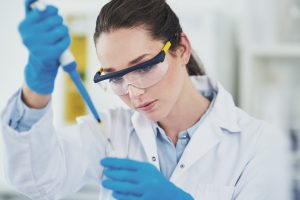
The same analytical instruments. Cannabis labs use High Performance Liquid Chromatography (HPLC) for potency testing (i.e., cannabinoids, terpenoids, flavinoids, etc.), which can be applied to nutraceutical testing for verifying vitamin content, quantifying herbal extracts, and confirming label claims. Cannabis labs also use LC-MS/MS and GC-MS to screen for pesticides, which are also a concern in dietary supplements. Many cannabis labs use qPCR methods to screen for human pathogens (i.e., Salmonella, E. coli, Listeria, etc.), which are also targets for supplements, vitamins, botanicals, and nutraceuticals. All this means cannabis labs can expand their customer base without making a large capital investment on new equipment and instruments.
The same botanical complexity. Cannabis is a plant-derived product with dozens of active compounds (i.e.,cannabinoids, terpenes, flavonoids) that must be identified and quantified. Supplement testing faces the same challenges with herbal extracts, adaptogens, botanicals, and functional ingredients. The analytical chemistry skillset transfers directly.
The same contaminant categories. Both product types require testing for heavy metals (lead, arsenic, mercury, cadmium), pesticide residues, microbial contamination (bacteria, mold, yeast), residual solvents in extracts, and moisture content. A cannabis lab that has validated methods for all of these can offer equivalent services to a supplement manufacturer with minimal additional development work.
The same regulatory language. Both industries operate under ISO/IEC 17025 accreditation standards. Both require Certificates of Analysis that document test results in legally defensible formats. Labs already fluent in one regulatory environment aren’t starting from scratch in the other.
3. Consumers are Commanding Third-Party Testing
The supplement industry’s shift toward third-party testing is driven by consumers who have become increasingly sophisticated about product quality.
Market data tells the story clearly: around 50% of supplement brands now depend on third-party verification, and independent third-party testing laboratories hold a 65% revenue share of the dietary supplement testing services market. Third-party certification programs like NSF International and USP Verified have moved from niche differentiators to near-expectations in premium segments.
Nearly 45% of supplements face mislabeling risks, according to industry estimates, and health-conscious consumers are taking note. Now more than ever, customers who spend significant money on wellness products expect them to perform as advertised. In response, brands that invest in rigorous third-party testing are increasingly able to command premium pricing and differentiate in crowded markets.
Cannabis consumers went through this same evolution earlier, and quickly. The demand for a Certificate of Analysis became expected among cannabis buyers within just a few years of legalization. As supplement consumers arrive at the same place, those labs are well positioned to meet them.
The Case for Convergence
Cannabis markets in many states have matured and become fiercely competitive. Expanding into supplement testing offers a way to fill analytical capacity without adding new equipment, serve a market with less volatile regulatory risk than cannabis, and build revenue streams that don’t depend on the fortunes of a single plant.
Furthermore, the expansion of cannabis testing labs into nutraceuticals is a signal of a broader convergence happening across the wellness industry where cannabis, hemp, vitamins, botanicals, and traditional dietary supplements are increasingly occupying the same consumer spaces and regulatory conversations.
Testing labs that can credibly serve the entire spectrum, from a THC potency test to a heavy metals screen on an ashwagandha extract, are well-positioned to service the entire wellness industry.
Interested in Expanding?
PathoSEEK qPCR assays were initially developed and validated to identify microbial pathogens in cannabis and hemp, which are two of the most chemically complex botanical matrices in regulated testing. That experience means our microbial testing method can perform in difficult botanical supplement and nutraceutical matrices.
PathoSEEK microbial detection assays can be used to support compliance with USP and FDA cGMP requirements, and results can be obtained in as little as 24 hours. The method can also be easily automated using the BMS Myra Liquid Handler, making it easy on onboard and scale as you grow.